The practice
Manuja Law Partners is a litigation practice with its principal chamber at the Delhi High Court and a chamber at Saket Courts. The work is trial-level litigation: divorce and family matters, criminal defence and bail, property and title disputes, partition, recovery and cheque bounce matters, landlord and tenant disputes, and the civil litigation that sits alongside them.
The practice appears at 11 district court complexes — Tis Hazari Court, Dwarka Court, Saket Court, Patiala House Court, Rouse Avenue Court, Rohini Court, Karkardooma Court, Gurgaon District Court, Noida District Court, Ghaziabad District Court, Faridabad District Court — and does not hold itself out as practising across every court in Delhi. Which complex a matter belongs to is fixed by law: by the police station that registered the FIR, by where the property is situated, or by where the collecting bank branch sits. Where a matter falls outside these, we say so at the first meeting.
Manuja Advocates is our branch practice.
How matters are run
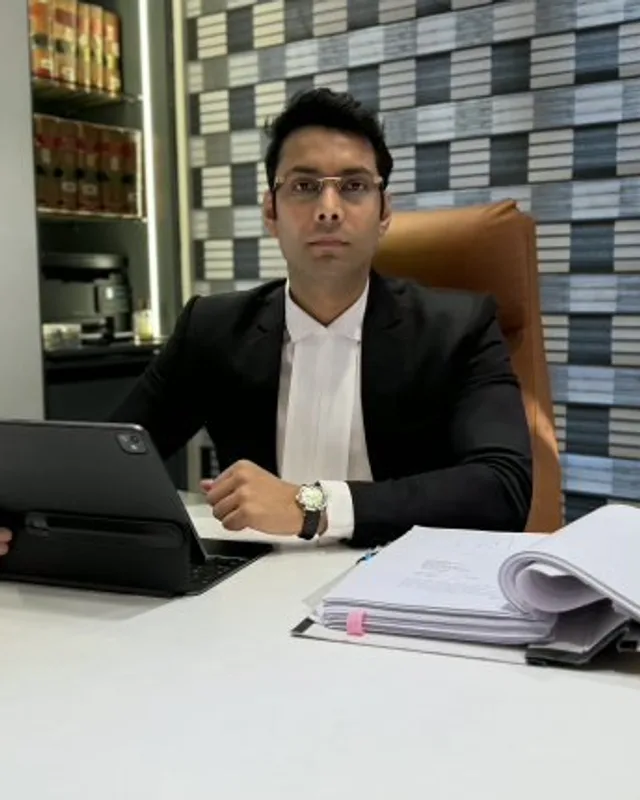
The firm is led by its founding partner,Advocate Kanisth Manuja. Every matter is led personally by him. In a chamber of this size that is not a marketing line but a structural fact: the advocate who takes your instructions is the advocate who settles the papers and argues the case. Matters are not distributed to whoever is free on the date.
After each effective hearing you receive a short account of what the court said, what was directed, and what the next date is for. It is written in ordinary language rather than sent as a copy of the order sheet.
Fees are quoted for the specific matter at the first consultation, with the professional fee separated from court fees and incidental expenses, and confirmed in writing before anything is filed.
What we will tell you
Litigation is slow and its outcomes are uncertain, and both of those facts are better confronted at the start than discovered in year three. Where a settlement on offer is worth more than the judgment you are likely to obtain, you will be told. Where an application is better made later than now, you will be told that too — including when the advice shortens the engagement.